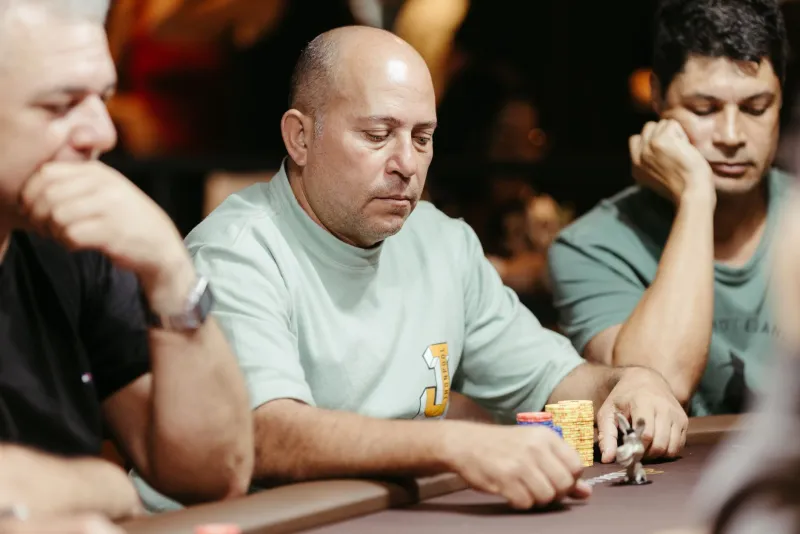
Riding High, Losing More: The Hidden Danger of Casino Winning Streaks

You're up $400. The last six hands went your way. The chips are stacking up, your confidence is through the roof, and somewhere in the back of your mind a voice whispers: keep going, this is your night.
That voice has cost more players more money than bad strategy ever will.
Winning streaks are one of the most seductive — and statistically misunderstood — experiences in gaming. And if you've ever walked away from a session with less than you had at your peak, you already know how this story ends. The question isn't whether variance will catch up with you. It's whether you'll be smart enough to get out before it does.
What Variance Actually Means (And Why Most Players Get It Wrong)
Variance is just a math term for the natural swings that happen in any game involving randomness. In the short run, outcomes cluster in ways that feel meaningful — a run of blackjack wins, a slot machine that keeps paying out, a poker hand where every bluff lands. None of it is a signal. All of it is noise.
Here's the thing about randomness: it doesn't self-correct. The roulette wheel doesn't "know" it just hit red seven times in a row. The next spin has the exact same odds as the first. This is called the Gambler's Fallacy, and even experienced players fall for it in both directions — expecting a losing streak to turn around and expecting a winning streak to continue.
Statistically speaking, the longer a session runs, the more your results will drift toward the house edge. That's not pessimism — that's math. A hot streak doesn't change the underlying odds. It just temporarily obscures them.
Why Your Brain Treats Winning Like a Drug
Neuroscience has a lot to say about what happens when you're on a roll. Winning triggers dopamine release — the same reward chemical associated with food, social approval, and yes, actual drugs. Your brain starts pattern-matching, finding "reasons" you're winning. Maybe it's the seat you're in. Maybe it's the time of day. Maybe you've finally cracked the code.
You haven't. But your brain doesn't want to hear that.
This is called hot hand fallacy — the belief that a player who has succeeded recently is more likely to succeed in the future. It's been documented in basketball fans, stock traders, and casino players alike. And it has a very specific consequence: people start betting bigger.
Research consistently shows that players increase their bet sizes significantly during winning streaks, often doubling or tripling their standard wager. The logic feels sound in the moment — you're winning, so lean in. But what's actually happening is that you're exposing more of your bankroll to the same house edge that was always there, just at a moment when your judgment is most compromised.
How Platforms Are Built to Amplify the Feeling
This isn't an accident. Modern gaming platforms — online and physical alike — are designed to make winning feel bigger than it is. Sound effects ramp up. Animations get flashier. Some platforms even surface your win total prominently while keeping your total wagered amount buried in a menu somewhere.
Easy-to-use interfaces, for all their genuine benefits, can also reduce the friction that might otherwise prompt a player to pause and take stock. When loading up another bet takes two taps and half a second, there's no natural break in the action to ask yourself: am I still up? Should I stop?
That frictionless experience is genuinely great for casual play. But during a winning streak, a little friction might actually save you money.
The Profit Erosion Pattern
Here's how it typically plays out. A player starts a session, gets lucky early, and builds a solid cushion — say, up $300 on a $100 buy-in. Instead of pocketing the profit, they continue playing. Bets get bigger. Eventually, variance normalizes and the streak ends. By the time they quit, they're either back to even or down.
This pattern is so common it has a name in behavioral economics: loss chasing in reverse. Just as players chase losses by doubling down after a bad run, they chase gains by refusing to lock them in after a good one. Both behaviors are driven by the same psychological engine — the refusal to accept the current outcome as final.
The cruel irony is that the player who walks away up $300 on a $100 buy-in made an objectively great decision. But it doesn't feel great when you were up $500 twenty minutes ago.
Concrete Strategies to Lock In Gains Before Overconfidence Takes Over
The good news: you can build guardrails into your session before the dopamine kicks in.
Set a win limit before you start. This sounds basic, but most players only set loss limits. Decide in advance: if I'm up X amount, I'm done. Write it down. Put it in your phone. Make it a rule, not a suggestion.
Use the half-bank rule. When you've doubled your starting stack, pocket half and only play with the rest. This guarantees you leave with a profit no matter what happens next. It's not exciting. It works.
Change the game or take a break. If you've been running hot at slots for 30 minutes, step away. Get a drink, check your phone, do something that breaks the psychological momentum. Winning streaks feel like flow states — the goal is to interrupt that flow before it carries you over a cliff.
Track your actual numbers. Most players have a vague sense of whether they're up or down. Vague senses are unreliable. Keep a simple running total — even a note in your phone. Seeing the real number cuts through the fog of in-session confidence.
Treat peak profits as real money. One useful mental trick: when you hit your personal high-water mark during a session, imagine you've already cashed out. That $500 peak is real money. Every bet you make after that point is spending it. Does that change how you play? It should.
The Easy Game Is Knowing When to Stop
At Gampang.net, we talk a lot about keeping things simple — because simple usually works. And the simplest truth in gaming is this: a profit you walk away with is worth infinitely more than a bigger profit you almost had.
Variance will always exist. The house edge will always exist. The only variable you actually control is when you stop. Players who understand that — who treat a winning streak as a gift to be pocketed rather than a signal to press harder — are the ones who come out ahead over time.
Your hot streak isn't evidence that you've figured something out. It's an opportunity. The question is whether you're smart enough to take it.